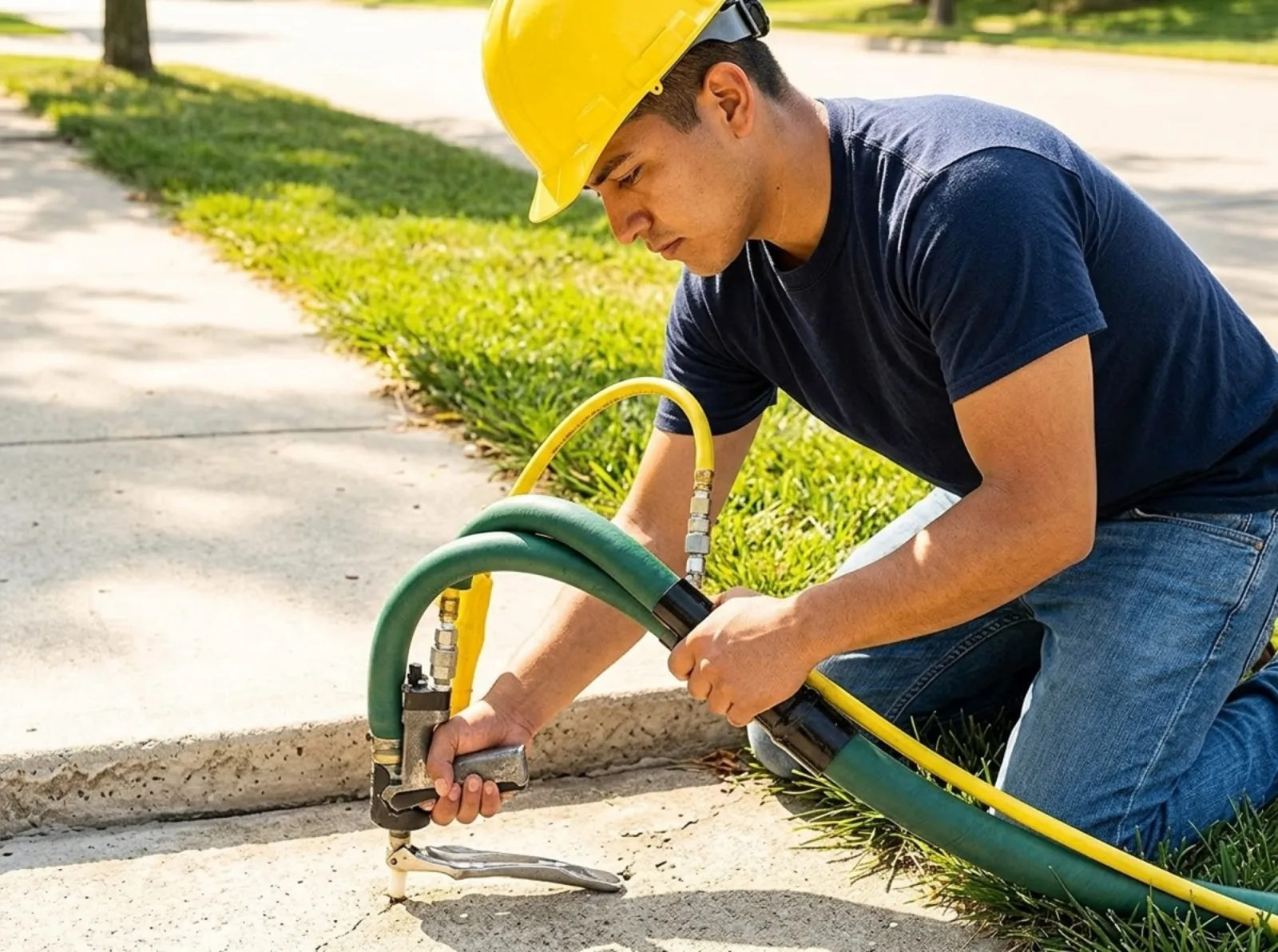
Concrete Leveling & Polyjacking
Concrete Leveling & Polyjacking in Charleston, SC
Sunken slabs can often be raised instead of replaced. Learn how foam leveling works and when it fits.
Signs a Slab Has Sunk
A slab that has sunk is easy to spot. Look for:
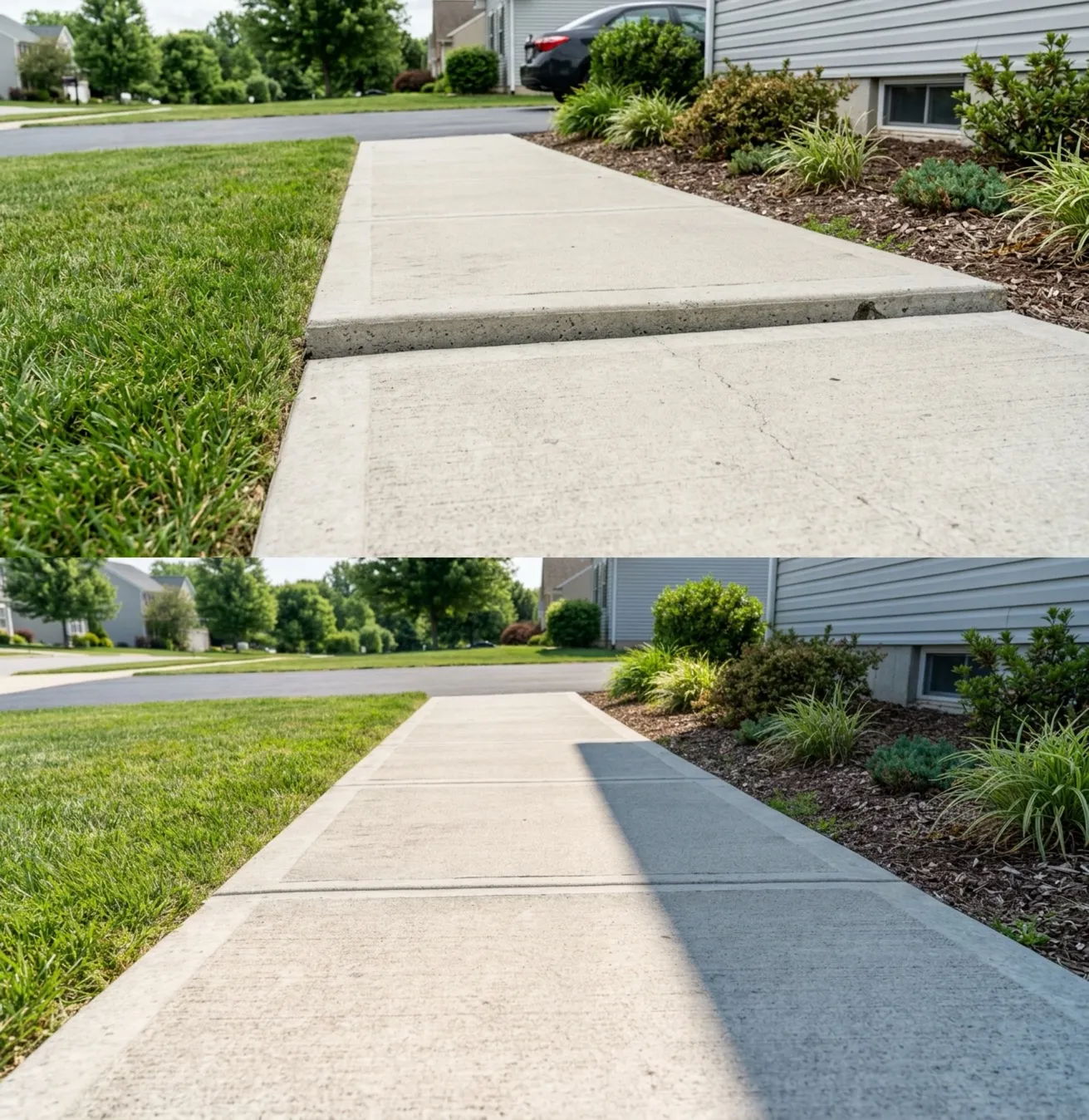
- A step or lip where two slabs meet.
- A driveway, walk or patio that slopes toward the house.
- Water that pools on a slab after rain.
- Gaps between a slab and the house or a step.
- A garage floor that has dropped or cracked.
- Hollow sounds when you tap a slab.
Sunken slabs are a trip hazard. A cracked slab is not always liftable, so a visit is needed.
Foam, Mud or Replace?
There are three common ways to deal with a sunken slab. Each has a place.
Ask how long the contractor expects the fix to last and what could change that.
| Option | How it works | Fits when | Limits |
|---|---|---|---|
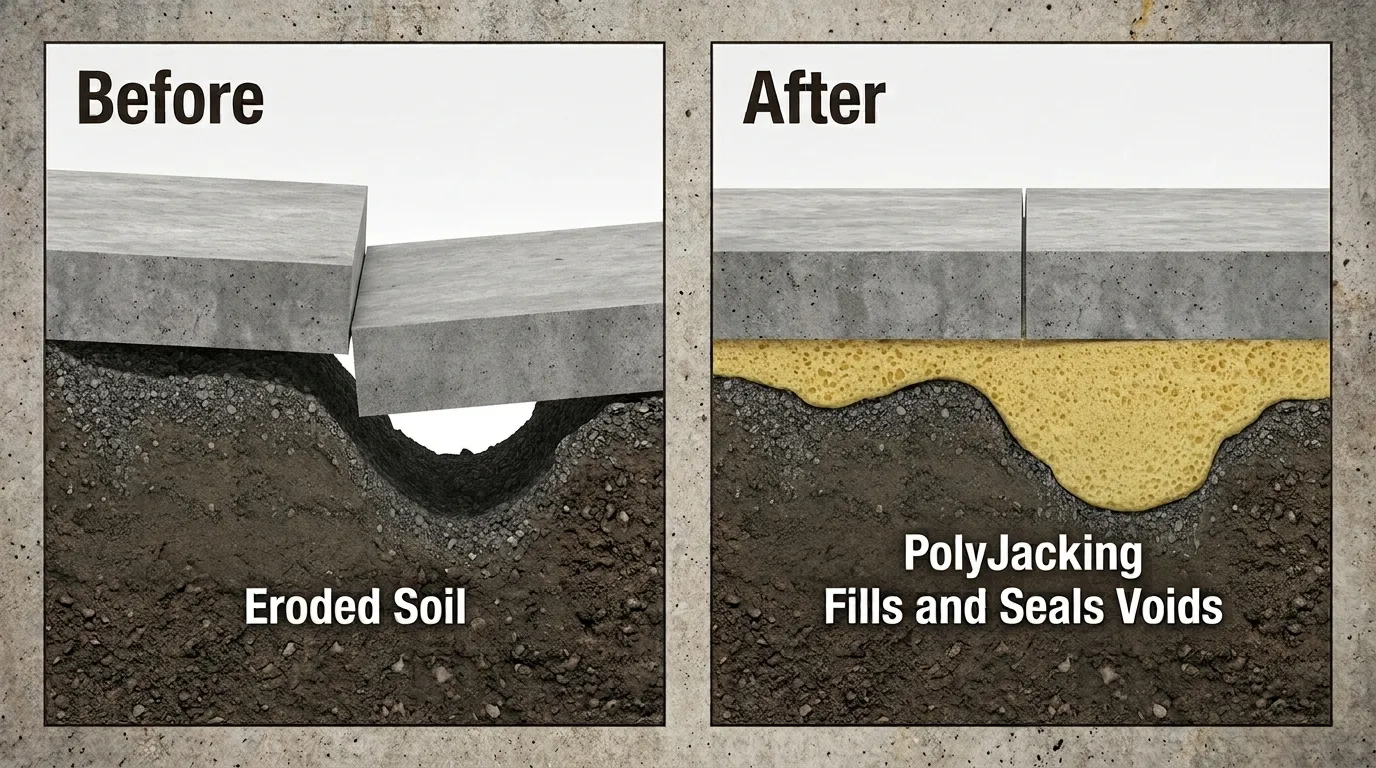
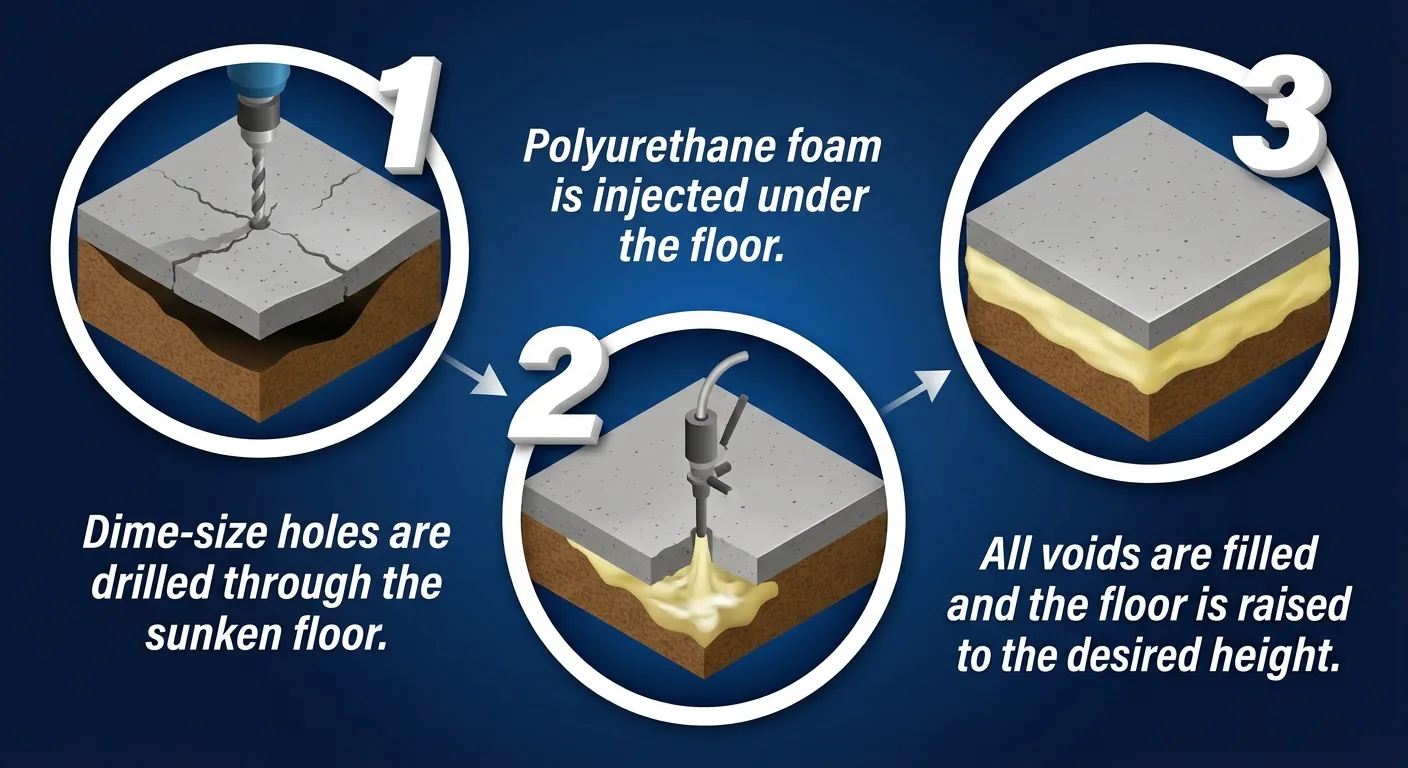
| Polyurethane foam | Small holes are drilled, and foam is injected under the slab to fill voids and lift it | The slab is in one piece and the void is shallow | Badly broken slabs may not lift evenly |
| Mudjacking | A cement slurry is pumped under the slab | Larger voids and heavy slabs | Heavier, and the holes are bigger |
| Replacement | The slab is broken out and poured new | The slab is cracked apart or crumbling | Slowest, and the cause of the sinking still has to be fixed |
How a Slab Lift Usually Goes
- Check the slab. The visit measures the drop, looks for cracks and finds where water gets under the slab.
- Plan the holes. The contractor marks injection points based on where the slab sank.
- Drill and inject. Small holes are drilled. Foam or slurry is pumped in slowly while the slab is watched.
- Level and check. The slab is raised in small steps until it is level with its neighbors. The holes are patched.
- Fix the water. If water washed the soil out, the contractor suggests a drainage fix so it does not happen again.
What Changes the Price of a Slab Lift
What changes the price of lifting a slab:
- How many slabs need lifting and how big they are.
- How far they have dropped.
- The material, foam or slurry, and how much it takes.
- Whether a slab is cracked beyond repair.
- Any drainage work needed to keep it from sinking again.
We list no prices on service pages. Ask for a written estimate that names each part.
Soft Ground Under Slabs
Slabs sit on soil, and Lowcountry soil is often wet. Our NRCS samples across seven Charleston-area towns show 87 of 233 natural-soil points poorly or very poorly drained. At 67 the water table reaches the surface at some point in the year.
Heavy rain adds to that. The National Weather Service Charleston storm history lists Hurricane Matthew (2016) with widespread 6 to 12 inches of rain. Water that runs under a slab can carry soil away.
Fixing the water usually matters as much as lifting the slab. See drainage and water control.
Sources: USDA NRCS Soil Data Access, queried October 5 and 6, 2026 (samples in seven Charleston-area towns); National Weather Service Charleston.
Concrete Leveling & Polyjacking Questions in Charleston, SC
Can any sunken slab be lifted?
No. A slab in one piece usually can be. A badly cracked or crumbling one may need replacing. A visit shows which you have.
What is polyjacking?
It is a name for lifting a slab by injecting foam under it. Small holes are drilled, foam fills the void, and the slab rises. The holes are then patched.
Why did my driveway sink?
Soil under it washed out or compressed. Water is a common cause. The contractor looks for where the water goes.
Can a sunken slab damage my house?
It can send water toward the house. A slab that drops against a wall can also open gaps. Have it checked.
Is foam or mudjacking better?
It depends on the slab, the void and the contractor's plan. Ask for the reason behind the choice. Foam is lighter, and slurry suits large voids.
Contact Us Today for a Free Estimate
Tell us what you see at your slab. A licensed and insured contractor can check the drop and the water, then give you a free estimate for concrete leveling in Charleston.