Floor Joist, Girder & Sagging Floor Repair
Floor Joist Repair in Charleston, SC
Floor joist repair starts with the cause. See what a sag, bounce or slope can mean in the Lowcountry.
Floors That Sag, Bounce or Slope
A floor that moves tells you something below it has changed. These are signs a homeowner can see:
- A floor that dips or slopes toward one side. It may mean a joist, girder or pier has sunk or weakened.
- A bouncy or springy feel when you walk. Joists may be too long for their span, cracked or soft.
- Doors and cabinets that stick or no longer close. The frame may have shifted.
- Gaps between the baseboard and the floor. The floor may have dropped away from the wall.
- Soft or spongy boards, or a musty smell. Wood may have taken on moisture.
- Small holes, mud tubes or crumbly wood under the floor. Insects may be one cause.
- Cracked or leaning piers, or a girder that bows. The support line may be moving.
These signs have more than one possible cause. Only an inspection shows which one applies.
Floor Joist Repair: Sistering, Girders, Piers and Moisture
Good floor joist repair in Charleston fixes the weak part and the reason it weakened. A new board over a damp spot may fail again.
Often more than one repair is used together.
| Repair | What it does | Fits when | Limits |
|---|---|---|---|
| Sistering joists | Fastens a new board beside a weak joist so both carry the load | A joist is cracked, notched or sagging but mostly sound | Does not help if the support under it has moved |
| Joist replacement | Swaps out a joist that is too far gone to keep | Wood is rotted or badly damaged | Needs access and the floor held in place |
| Girder or beam repair | Reinforces or replaces the main beam that joists rest on | The girder is cracked, bowed or decayed | Larger job, since many joists rest on it |
| New or adjusted piers | Adds or resets posts that hold up the girder | A pier has sunk, leaned or is missing | Wet ground may call for deeper support |
| Moisture source fix | Dries or blocks the damp that is hurting the wood | Wood is damp, soft or stained | Repairs alone will not keep it dry |
How a Sagging Floor Repair Usually Goes
- Look from below. For floor joist repair, the contractor checks joists, girders, piers and the floor above, often from the crawl space.
- Find the cause. Moisture, insects, a sunk pier or overloaded wood may each call for a different fix.
- Plan the support. The contractor picks which repairs go together, and what must be supported first.
- Repair and level. Crews sister or replace joists, fix the girder and set piers, then bring the floor back to level where it is safe to do so.
- Deal with the damp. Ask what will keep the area dry, so the repair lasts.
What Moves the Price of Floor Joist Repair
What moves the price of floor joist repair:
- How many joists need floor joist repair and how long the weak stretch is.
- Whether the girder or beam needs repair or replacement.
- How many piers must be added, reset or replaced.
- How much room there is to work under the floor.
- Rot, insect damage or moisture that must be fixed first.
- Pipes, ducts or wiring that must be moved.
We list no prices on service pages. Ask for a written estimate that names each part.
Damp Air and Wet Ground Under Lowcountry Floors
The SC State Climatology Office describes the state as humid subtropical, with hot, humid summers. It also says the state has no distinct dry season.
In our soil survey samples from seven towns, 67 of 233 points have a water table at the surface at some point in the year. Another 87 are poorly or very poorly drained. Source: USDA NRCS Soil Data Access, queried October 5 and 6, 2026.
Census estimates (ACS 2024 1-year) put Charleston County at 48.0% of housing units built before 1990 (104,227 of 216,974). Older floors have had more years to carry load.
The census does not say how many buildings sit on crawl spaces or piers, so ask what is under yours. Water that sits near a crawl space may be a matter for drainage and water control, and damp air for crawl space sealing.
Sources: SC State Climatology Office, Overview of South Carolina's Climate and Hazards; USDA NRCS Soil Data Access; U.S. Census Bureau ACS 2024 1-year via Census Reporter.
Where Floor Repair Meets Foundation Work
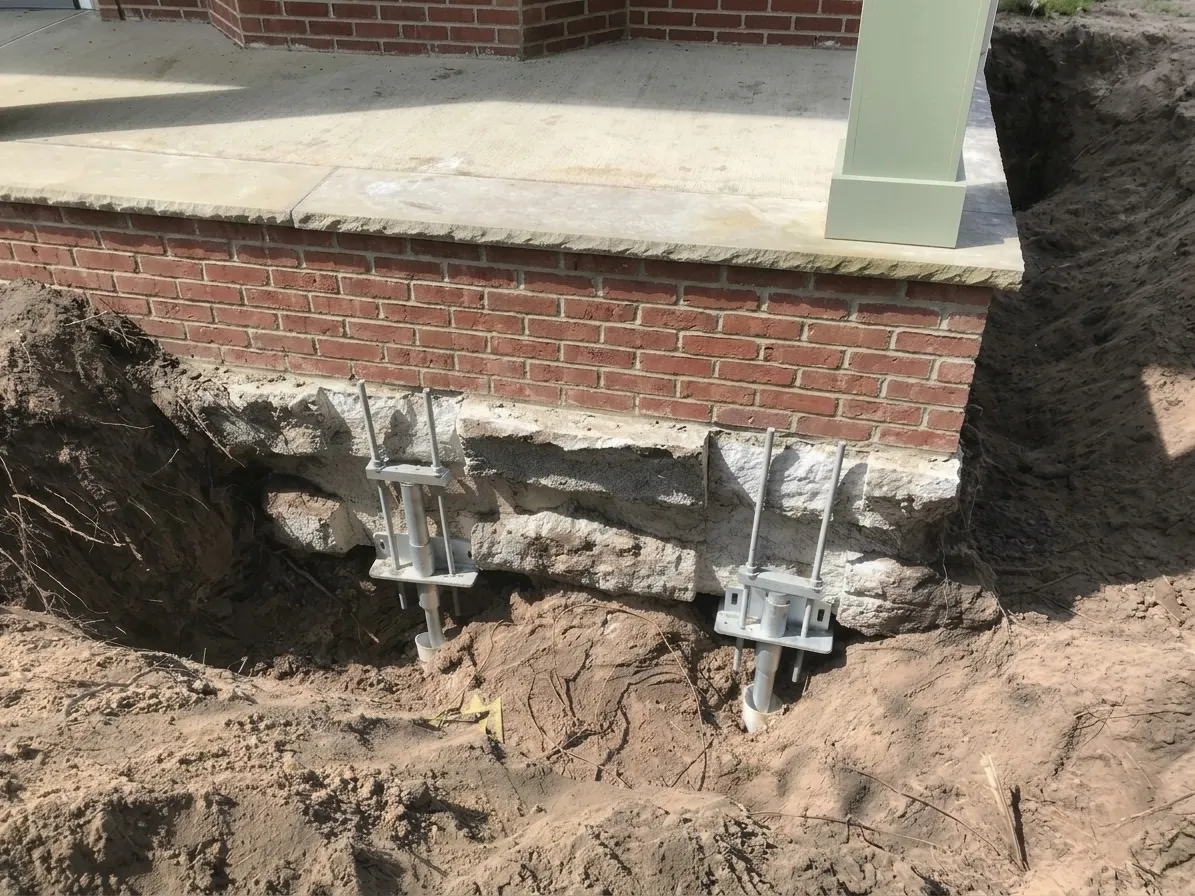
A sagging floor can start in the wood or in the support below it. If piers have sunk, see foundation repair and piering.
When the cause is unclear, a foundation inspection and structural evaluation comes first. The work is performed by licensed and insured contractors.
Floor Joist Repair Questions in Charleston, SC
Can a bouncy floor be fixed without replacing it?
Often, yes. Added support below, such as sistered joists or an adjusted pier, can stiffen a floor. Only an inspection shows what yours needs.
What does sistering a floor joist mean?
A new board is fastened beside a weak joist so the two share the load. It fits when the old joist is cracked or sagging but still sound enough to keep.
Does a damp crawl space cause a soft floor?
Damp air and wet ground may soften wood over time. The contractor looks for the moisture source, since new wood in the same damp spot can fail again.
Do I need a new girder or just more piers?
A sound girder may only need new support under it. A cracked or rotted girder may need repair or replacement. An inspection decides.
Should I keep using a floor that sags a lot?
Floor joist repair can wait for an inspection, but be careful. If a floor gives way underfoot or drops fast, limit use of that spot and ask for an inspection soon. Do not add heavy items on top.
Contact Us Today for a Free Estimate
Tell us how your floor feels and where it dips. A licensed and insured contractor will look it over and give you a free estimate for floor joist repair in Charleston.