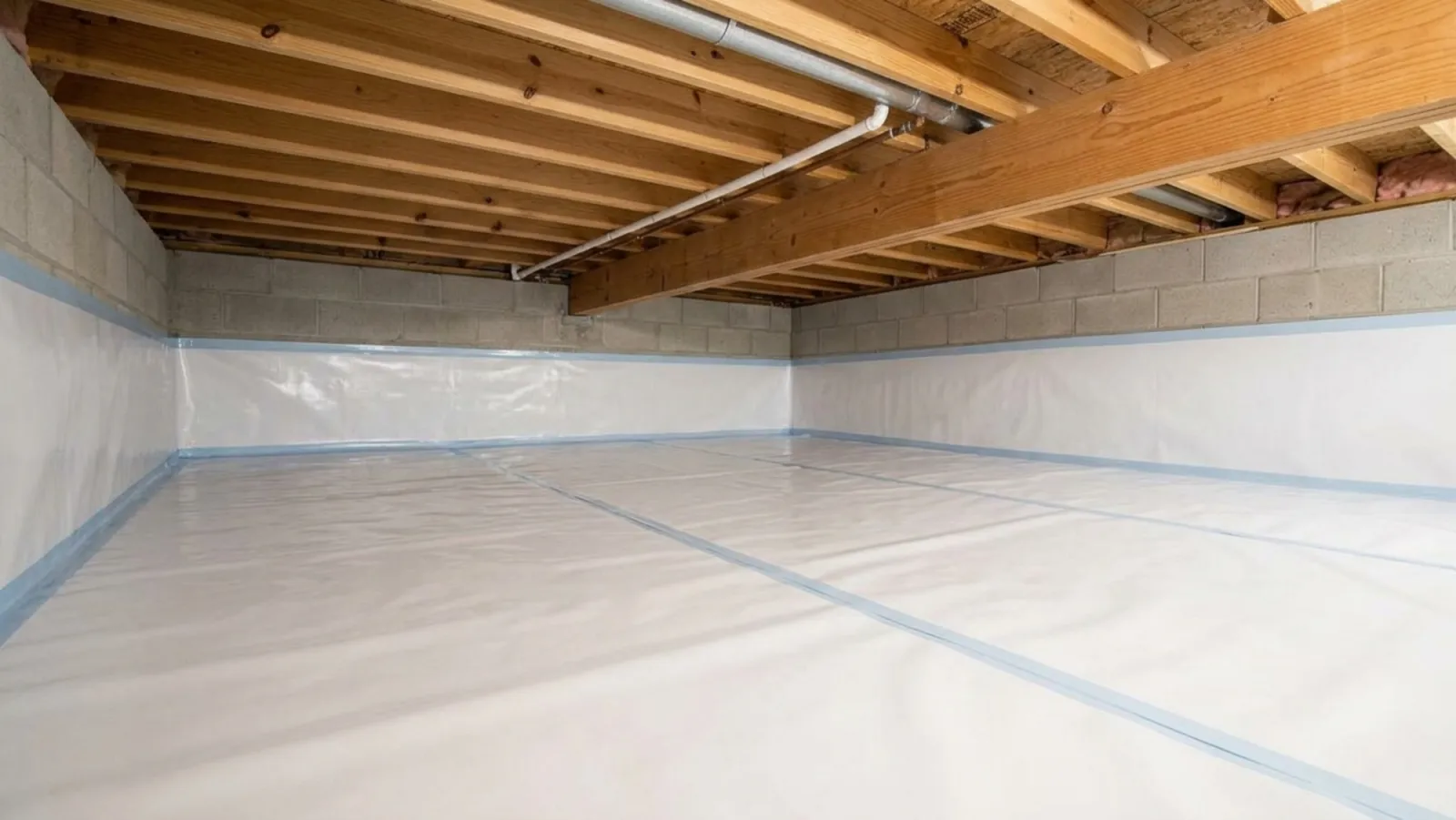
Crawl Space Encapsulation & Vapor Barriers
Crawl Space Encapsulation & Vapor Barriers in Charleston, SC
Warm, wet air and a shallow water table meet under many Lowcountry floors. See how sealing a crawl space works.
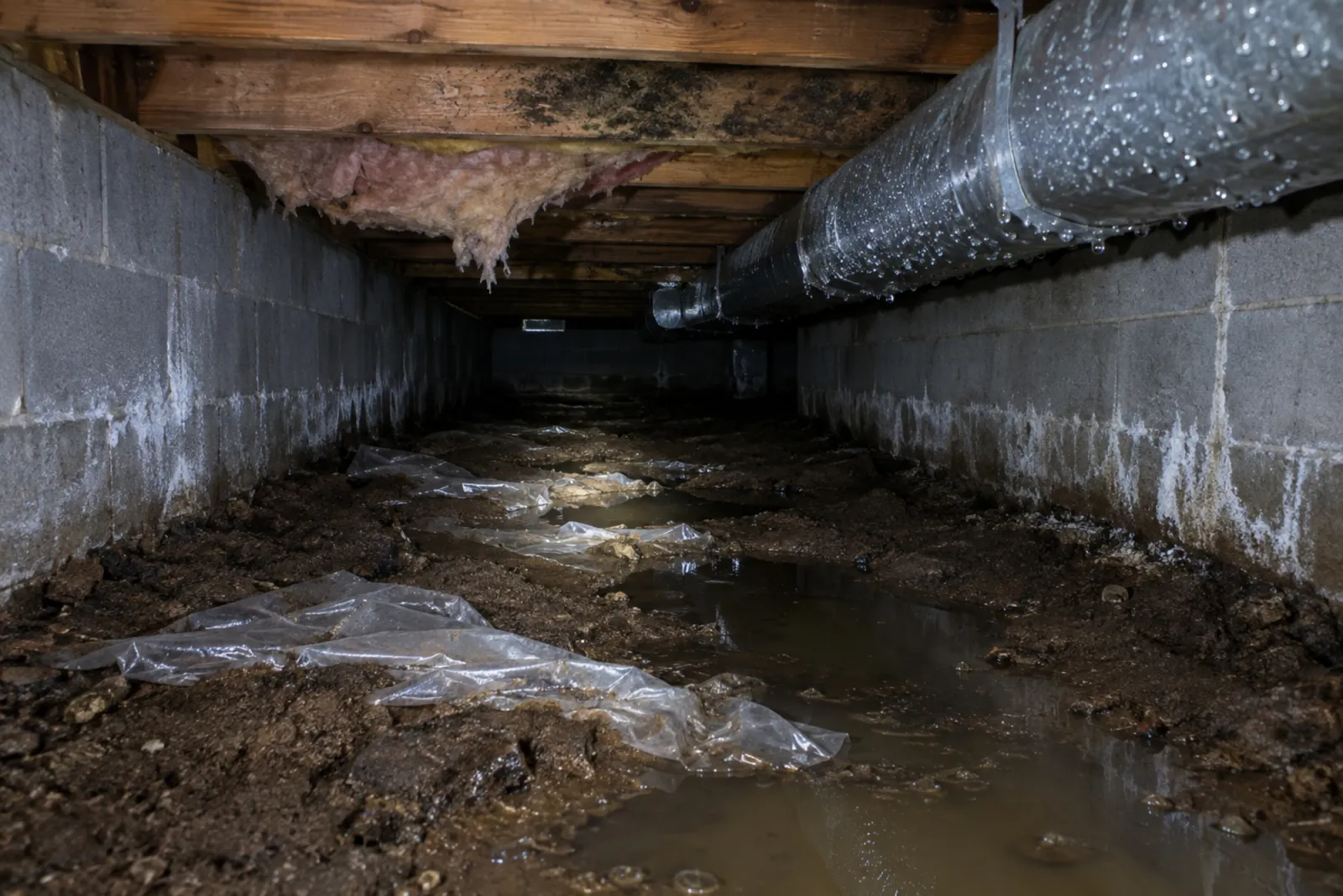
What a Damp Crawl Space Looks Like
Moisture under a house shows up in small ways first:
- A musty smell inside, mostly in warm months.
- Floors that feel cold, soft or bouncy.
- Dark stains, white mineral streaks or fuzzy growth on joists and block.
- Standing water or mud on the ground after rain.
- Insulation that sags or falls.
- Rusty ducts, or beads of water on them.
We cannot tell you what a stain is from a photo. A person has to look and test.
Barrier Only, Full Sealing or Water Control
Crawl space work ranges from a ground cover to a fully sealed space. More sealing means more work and more to maintain.
Compare what each choice does, not just what it costs.
| Option | What it is | Fits when | Limits |
|---|---|---|---|
| Ground vapor barrier | Heavy plastic over the dirt floor | The crawl space is mostly dry and vented | Does not stop humid air or wall moisture |
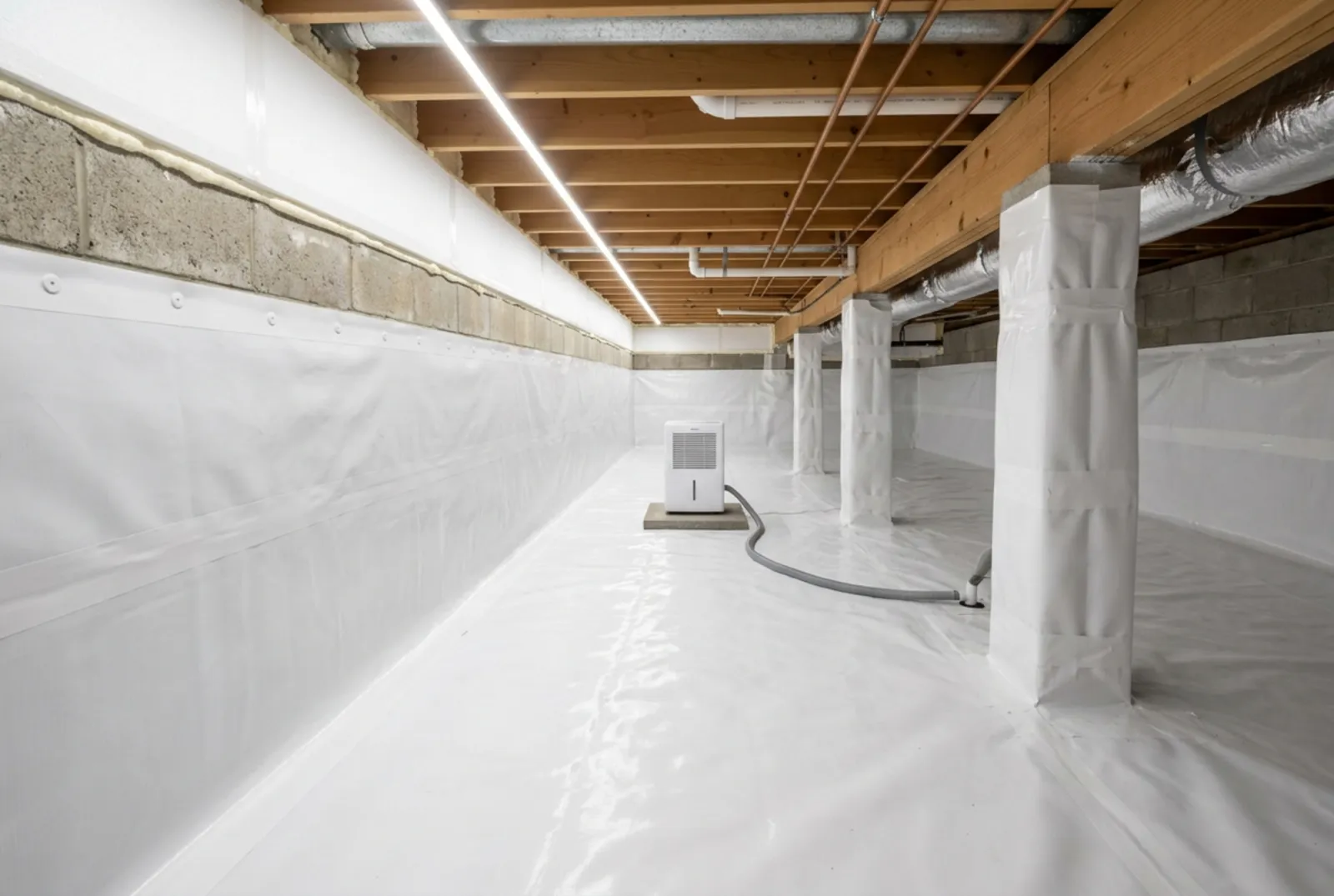
| Full encapsulation | Liner on floor and walls, taped seams, sealed vents, often a dehumidifier | Damp air is the main problem | Needs regular checks and a plan for any water |
| Water control add-on | Drain pipe or sump pump with a discharge line | Water collects on the ground | Needs a place to send the water |
| Insulation changes | New or moved insulation on walls or floor | Old insulation has failed | Does not fix moisture on its own |
How Sealing a Crawl Space Usually Goes
- Inspect the space. The visit looks at the ground, walls, vents, joists and any standing water. It also checks the yard around the house.
- Fix water first. Gutters, grading and drains come before liners. A liner will not keep out running water.
- Clean and prep. Crews clear debris and level the floor so the liner lies flat.
- Install and seal. The liner goes on the floor and walls. Seams are taped, and vents are closed as the plan says.
- Control the air. A dehumidifier or drain system may be added. Ask who checks it and how often.
What Changes the Price of Sealing
What changes the price of crawl space work:
- Square footage and how tall the space is.
- How much debris or old insulation must come out.
- Whether the plan is a ground barrier or full encapsulation.
- Drain pipe, a sump pump or a dehumidifier.
- Tight access and hard-to-reach corners.
See cost ranges from other guides on our crawl space cost page.
Heat, Humidity and Wet Soil Here
The SC State Climatology Office describes most of the state as humid subtropical, with hot, humid summers and mild winters. Winter snow and ice events can be years apart in the Lowcountry, so moisture, not frost, is the main crawl space story. Source: SC State Climatology Office climate overview.
Our NRCS samples add a wet-ground clue. 67 of 233 natural-soil points in seven Charleston-area towns show a water table at the surface at some point in the year.
Census data does not say how many local homes have crawl spaces, so only an inspection shows whether this applies to you.
Sources: USDA NRCS Soil Data Access, queried October 5 and 6, 2026 (samples in seven Charleston-area towns); SC State Climatology Office.
Crawl Space Encapsulation & Vapor Barriers Questions in Charleston, SC
Is encapsulation always the right answer?
No. A dry crawl space may only need a ground barrier or better drainage. A damp or wet one may need full sealing. The inspection decides.
Why seal the vents?
Warm, humid outdoor air can bring moisture in through vents. Sealing them is part of many encapsulation plans, with a way to control the air inside. Ask your contractor to explain the plan for your house.
What if water stands in my crawl space?
Water control comes first. Look at gutters, grading and drains, and ask about a drain pipe or sump pump. See drainage and water control.
Does a sealed crawl space need upkeep?
Yes. Liners and equipment need an occasional look. Ask what to check and how often.
Can you tell me if it is mold?
Only testing can confirm that. We can point to staining and moisture. A contractor can suggest the next step.
Contact Us Today for a Free Estimate
Tell us what you see under your home. A licensed and insured contractor can check the moisture and the ground, then give you a free estimate for crawl space work in Charleston.