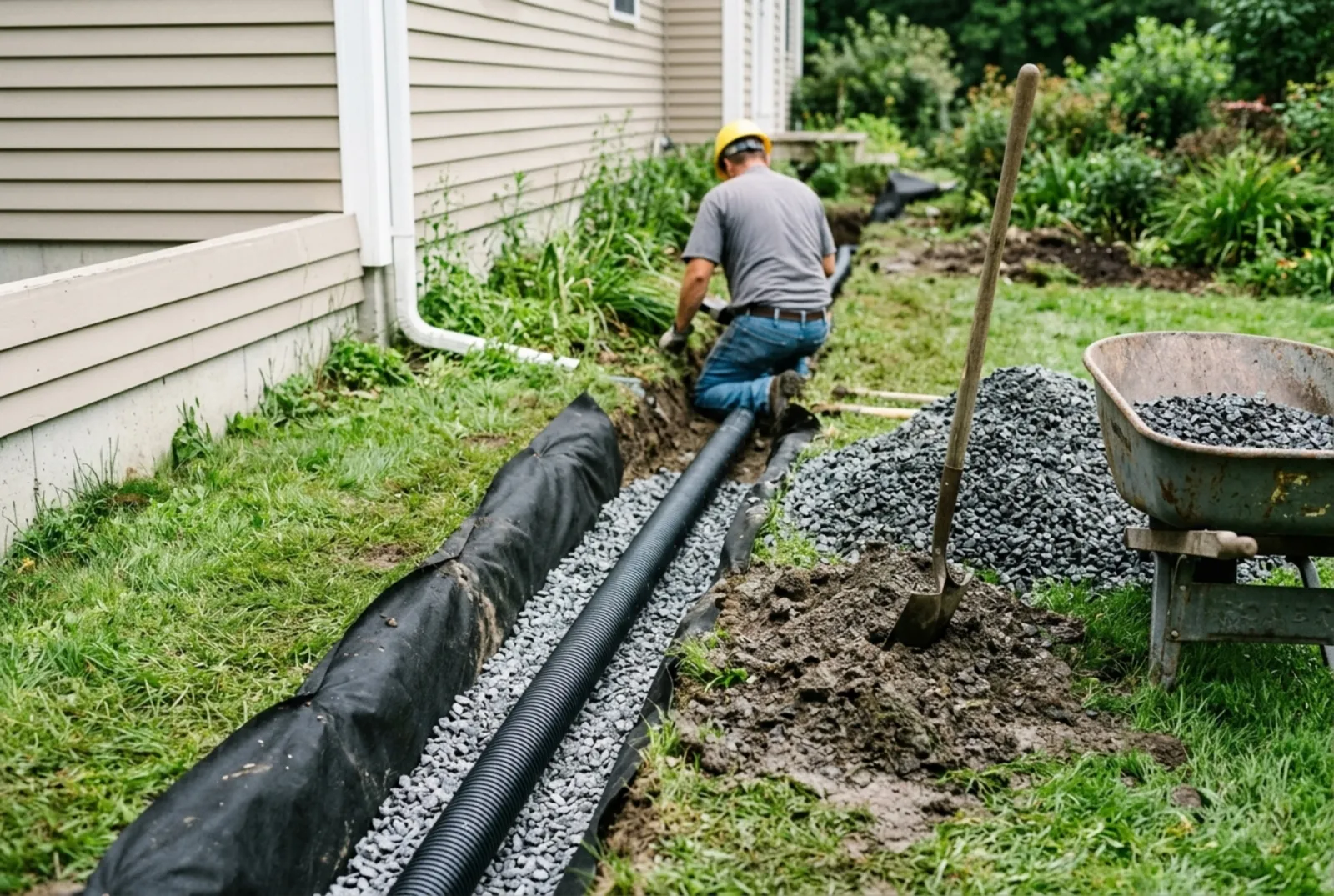
Drainage & Water Control
Drainage & Water Control in Charleston, SC
In the Lowcountry, rain, tides and a shallow water table all push water toward the house. See how to move it away.
Signs Water Is Winning
Water leaves clues on and around a house:
- Puddles near the foundation that last a day or more after rain.
- Mud, washed-out mulch or bare strips along walls.
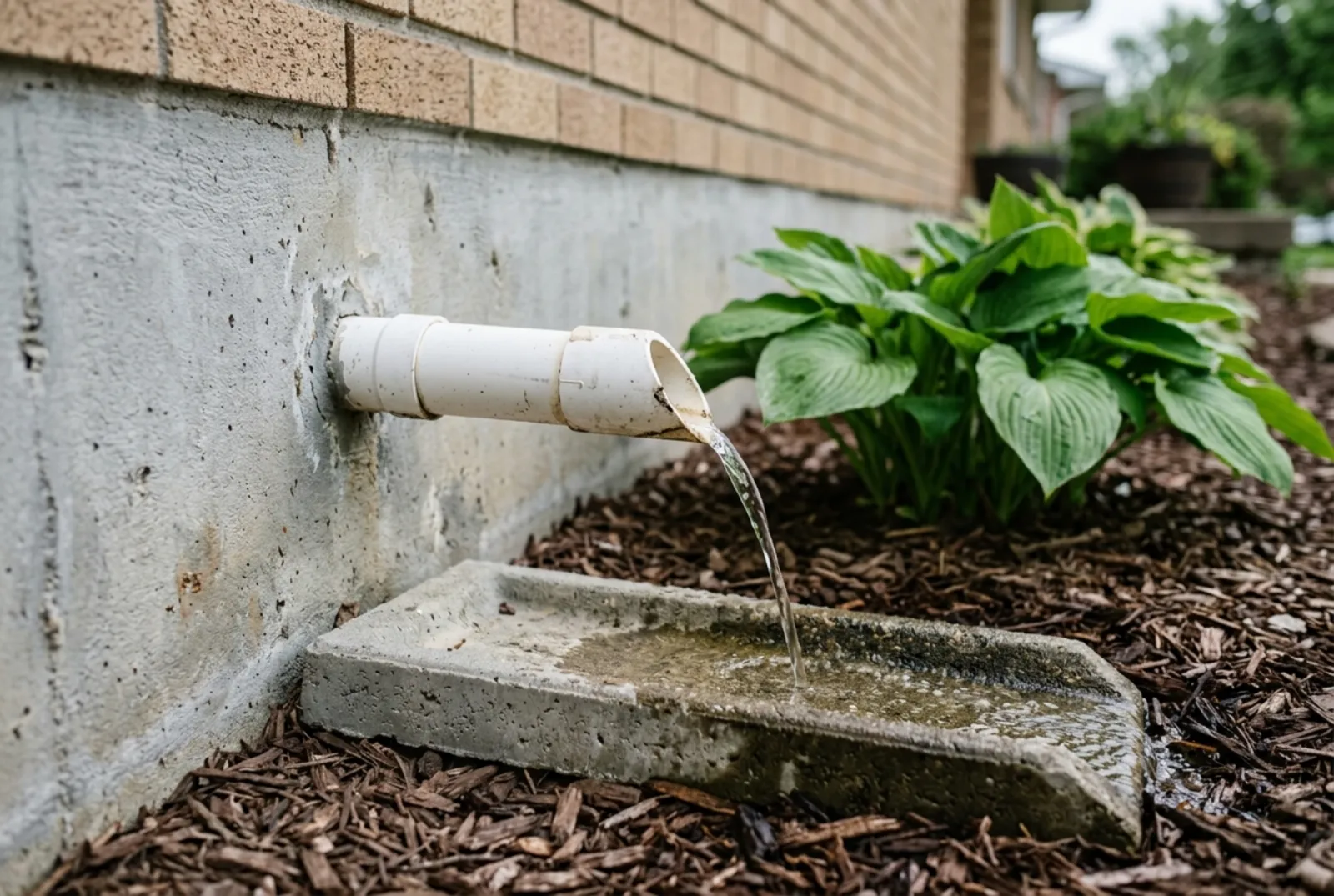
- Downspouts that empty right at the wall.
- Damp, stained or white-streaked block and concrete.
- A soggy yard that stays wet in dry weeks.
- Water or damp smells in a crawl space or garage.
Stains alone do not prove a leak. A visit looks at where the water comes from.
Gutters, Grading, Drains and Pumps
Water control is usually a set of small fixes, not one big one. Start with what costs least and see how much it helps.
A drain needs somewhere lower to send water. Plan that outlet first.
| Fix | What it does | Fits when | Limits |
|---|---|---|---|
| Gutters and downspout extensions | Carry roof water away from the walls | Roof water lands at the foundation | Need to be kept clear |
| Regrading | Reshapes the soil so water runs away | The ground slopes toward the house | Needs room and a place for water to go |
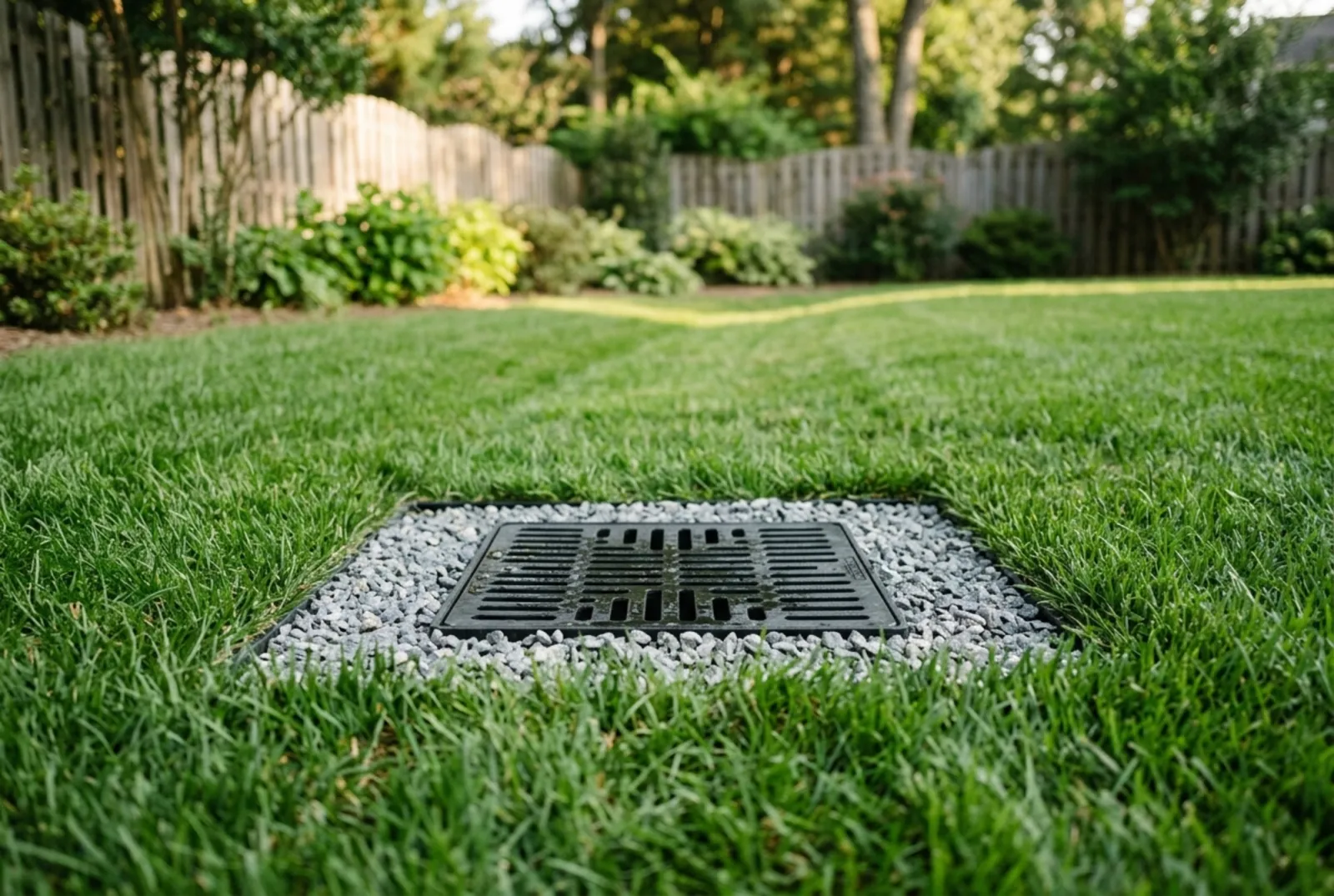
| Surface drain or catch basin | Collects water from a low spot | Water pools in the yard | Needs a pipe and an outlet |
| French drain | A gravel-filled trench with a perforated pipe | Water soaks in along a wall or slope | Can clog without fabric and upkeep |
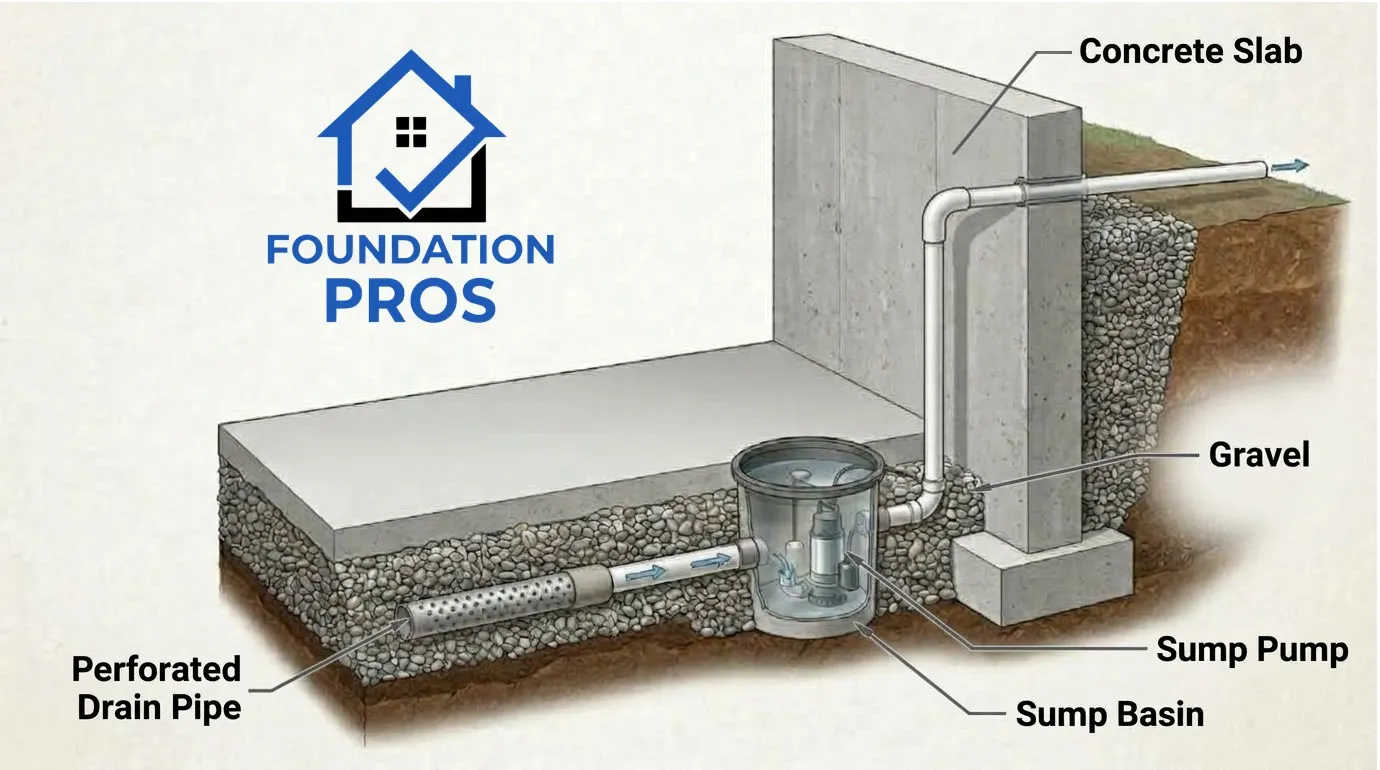
| Sump pump | Pumps water from a pit to a discharge line | Water collects in a low area and cannot drain by gravity | Needs power and an outlet that is not flooded |
How a Drainage Fix Usually Goes
- Watch the water. The visit looks at roof lines, downspouts, slopes and where water goes during rain.
- Find the outlet. The contractor picks a place the water can leave, such as a street, ditch or lower yard.
- Start small. Gutters and grading come first. Drains and pumps follow if they are still needed.
- Build and test. Crews install the drains or pump and test them with running water.
- Plan the upkeep. Ask what to clear and when, so the system keeps working.
What Moves the Price of Water Control
What moves the price of water control:
- How many fixes are needed and how long the runs are.
- Soil and slope on the lot.
- Where the outlet is and how far away.
- Pipe, gravel, pit and pump choices.
- Landscaping, fences or hardscape that must be moved.
We list no prices on service pages. Ask for a written estimate that names each part.
Rain, Tides and High Water Tables
Heavy rain is part of life here. The SC State Climatology Office lists Hurricane Matthew (2016) at 16.92 inches at Edisto Island Middleton. The National Weather Service Charleston storm history reports widespread 6 to 12 inches in the same storm.
The state office also names three kinds of flooding: river, heavy-rain drainage overload and coastal.
In our soil survey samples from seven towns, 67 of 233 points have a water table at the surface at some point in the year. Another clue: 87 are poorly or very poorly drained.
NOAA's Charleston Harbor gauge shows sea level rising about 1.4 inches every ten years.
That makes outlets the hard part. If the ground is already wet or the tide is high, a drain may not empty. Plan for it up front.
Sources: USDA NRCS Soil Data Access, queried October 5 and 6, 2026 (samples in seven Charleston-area towns); SC State Climatology Office; National Weather Service Charleston; NOAA station 8665530.
Drainage & Water Control Questions in Charleston, SC
Why does water pool by my foundation?
Roof water, flat or sloping ground and slow-draining soil all play a part. A visit finds which one drives yours.
Do I need a French drain?
Not always. Gutters and grading fix many yards. A French drain fits when water soaks in along a wall or slope.
Will a sump pump work in a high water table?
It can, but the pit and outlet must be planned for the water level. A pump also needs power. Ask the contractor about a backup plan.
Can drainage fix a cracked foundation?
No. Drainage removes one cause. Cracks may still need repair. Fixing water often helps keep damage from coming back.
What if my yard stays wet even with drains?
The water table may be high, or the outlet may be flooded. The contractor can check both. Ask about options for your lot.
Contact Us Today for a Free Estimate
Tell us where water gathers at your home. A licensed and insured contractor can trace it, then give a free estimate for drainage and water control in Charleston.